Analysis
Vanita Parti talks Blink Brow Bar's rise, just as the brand quietly renames itself
Blink Brow Bar founder Vanita Parti details two decades of growth in a new interview, but the bigger news is what it doesn't mention: her company has quietly rebranded as BBB London.
Published
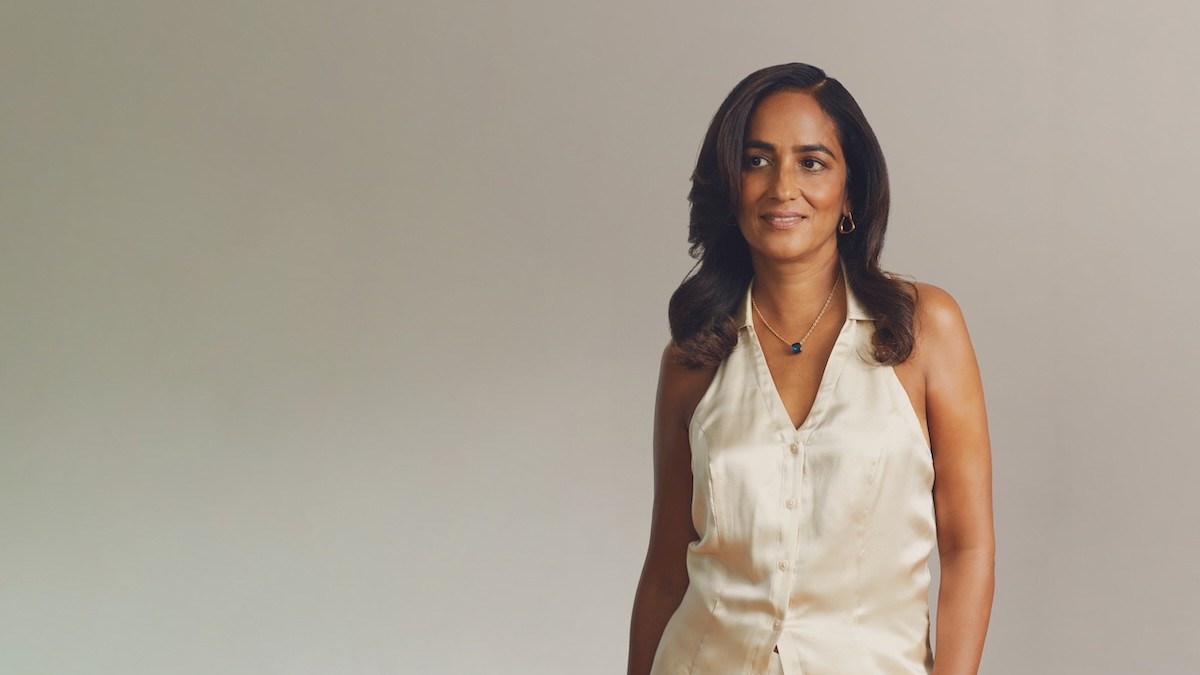
Vanita Parti opened her first threading chair in 2004, a walk-in concession squeezed into Fenwick on Bond Street. She had learned the technique, an old Indian hair-removal method using twisted cotton thread rather than wax or tweezers, during time spent in India, and brought it to a UK beauty market where it was still a novelty. That single chair became Blink Brow Bar, and Parti's account of building it into a national name is the subject of a new interview with Professional Beauty (UK), in which she walks through growth, focus and the discipline of scaling a service business one concession at a time.
The expansion followed a familiar high-street playbook: concessions inside Selfridges, John Lewis, Harvey Nichols and Topshop, plus a standalone site in Canary Wharf. Parti has said in past interviews, including one for The Smarter Podcast, that big department stores turned her down before word of mouth brought them back to the table, a detail that complicates the tidy version of the story where premium retailers simply recognised a good idea on sight. She self-funded the business from the outset, and has named overspending, not underselling, as her biggest early misstep, a founder's-honesty note worth setting against any interview that frames the company's rise as frictionless.
Blink also pushed abroad, opening inside Henri Bendel in New York before moving to a Saks Fifth Avenue location in September 2014, and building a presence in Paris at Le Bon Marché. The recognition followed the retail footprint: Parti received an MBE in the January 2015 New Year Honours list for services to the beauty industry, a formal acknowledgment that threading, a treatment barely known in Britain a decade earlier, had become a mainstream category with her name attached to it.
None of that history is static, and the most consequential recent development sits outside the interview's frame entirely. Blink Brow Bar has rebranded as BBB London, with a new identity built around the line "Your brows, your way" and a redesigned product range organised as a capsule eye make-up wardrobe. The company now markets itself on more than eighteen years of trading and twenty million brows shaped across over twenty-five salons in the UK, New York and Paris, figures that update an older claim, made on a podcast appearance, of fifteen stores internationally. A profile built around the Blink Brow Bar name arrives just as the company itself is retiring that name in favour of a new one, which raises the obvious question the interview leaves open: whether Parti sees BBB London as a continuation of the brand she built or a deliberate break from it.
The category she entered in 2004 is also far more crowded than it was then. HD Brows, Browhaus, Get Lashed and Benefit's own brow bar all arrived in the years after Blink, and Parti has referred to the wave of imitators that followed her early success as competitors she had to out-focus rather than out-spend. That crowding makes the rebrand read less like cosmetic refresh and more like repositioning against rivals who copied the format she pioneered.
Parti's public presence isn't limited to the business trade press. Her essay "Monobrow," a personal piece about a mother-daughter threading ritual, was highly commended in the 2024 Creative Future Writers' Awards, a prize for under-represented writers. It's a small credit next to an MBE and a multi-country retail footprint, but it points to the same material, threading as an inherited, intimate practice rather than a service menu item, that first gave her business its edge over salons offering the treatment as an afterthought.
One relationship gets little airtime in founder profiles but says something about what the brand became once threading stopped being a novelty: since 2019, Blink has run monthly brow workshops at Future Dreams House, the London home of the breast cancer charity FutureDreams, for chemotherapy patients regrowing their brows. Twenty years after that first chair at Fenwick, the treatment that once needed explaining to department-store buyers is now something Parti's company teaches to women relearning how their own faces look.
